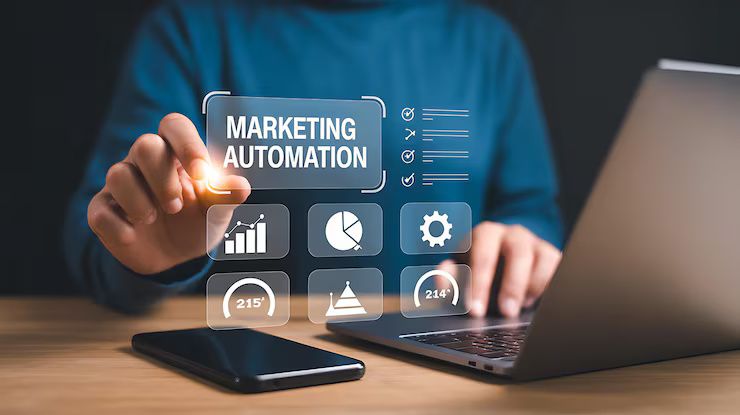
AI-powered marketing automation refers to the use of artificial intelligence technologies to manage, analyze, and optimize marketing tasks automatically. It combines data analytics, machine learning, and customer behavior tracking to deliver more relevant and timely communication.
Heavy stacks of client data often slow things down when handled manually. This approach started because of that delay. Information pours in - messages, web visits, posts - and businesses need to track it all closely. Rather than assuming preferences, they study how people actually behave online. Most tools just shuffle data around. This one shapes choices out of chaos. Not because it's flashy - because it listens like a person. Reactions land closer to real behavior, not textbook guesses. Timing slips through gaps if systems drag. Staying in step means moving before the moment passes.
Importance
These days, chat volumes grow - so clever tech in outreach counts extra. Messages meant just for you? Quick answers too? Always being there when someone reaches out? That matters heaps. Big companies, tiny stores, anyone selling something, even everyday users - all get caught up in this shift. How things unfold on screens quietly builds what people think of a name, moment after moment.
Key reasons why this topic matters today include:
- Messages today reflect real tastes, not just habit logs. Since preferences steer the tone, answers land differently each time. Responses grow out of things you’ve done, so they line up without trying. Gone are the flat, one-size replies - now every message bends toward your history. Clicks and choices leave traces that quietly reshape what comes next
- Out of nowhere, sending emails sped up when machines wiped out the repeat chores. Sorting people into groups started flowing easier - no more getting stuck on slow human inputs. The dull loops? Handled by code now, leaving room to focus elsewhere. With fewer folks tied to basic tasks, everything moved a little sharper
- Patterns already inside point ahead, so decisions follow. When silence speaks, numbers tell stories. Trends nobody sees make routes sharper. What comes tomorrow hides in tiny clues today. Repeats in data teach better moves
- Quick answers come alive through chatbots, keeping people tuned in. Right-now suggestions show up before hesitation kicks in. The rhythm of a moment lifts when speed meets expectation. When tech keeps step, back-and-forth gains a quiet ease. Gone waits leave traces - users sense the shift immediately.
Here’s how it functions. Overcoming common marketing obstacles happens by managing large volumes of information without dropping details. Because the framework ensures uniform results, alignment across platforms remains solid. When moments count, connecting with audiences shifts from chance to accuracy.
One way to look at it - old-style marketing beside smart machines doing tasks. Sometimes slower methods show up next to quick digital systems that learn on their own. Not everything works the same anymore since tools began adapting without constant human input. Differences appear clearly when results roll in week after week
Traditional Marketing and AI Automation Compared
Recent Updates
Twelve months back, things started shifting - machines now shape ads differently because cleverer code handles choices and words. Not long ago, upgrades in smart programs began reshaping bot behavior during online selling tasks.
- Come 2025, firms started depending more on artificial intelligence to track customer interactions with their brands - suddenly, marketing groups could better anticipate user moves. Earlier approaches used hunches; now, advanced setups spotted trends most overlooked. That change made strategy feel less reactive, more forward-thinking. Skepticism existed early, yet performance data revealed stronger campaign results. Over months, adjustments grew smoother as systems drew insight from actual actions rather than guesses.
- Later that year, machine understanding of spoken words took a leap forward. Into the new year, conversation tools started acting less like programs. Because they could now recall past parts of talks, answers felt more natural. Little by little, improvements in language models changed how these systems behaved. The way they answered became fluid, nothing like their older stiff patterns.
- Privacy-focused automation tools began grabbing attention when global chatter on data security ramped up in 2025.
- Out of nowhere, AI started shaping how brands see their customers. One clear picture emerged when it mixed with data tools. Messages began flowing smoother across channels, thanks to smarter coordination behind the scenes.
- Faster predictions emerge when clever code digs into behavior, showing firms how people stick around yet return again and again. Hidden habits rise to light as systems adapt, sharpening views on trust without relying on guesswork that misses the mark.
Laws or Policies
Every country sets its own pace when it comes to protecting data used in smart ad systems. Because of laws, companies must answer for how they collect personal details, where those details go, why they’re stored at all.
In India Relevant Frameworks Include
- A change in 2023 reshaped how digital personal info is treated. Following tougher routes defines today’s data handling. With consent now central, using personal details shifts focus. Access narrows, limited by tighter boundaries. Individuals step closer to choices shaping their own records. Ownership nudges closer to the individual. Firms gather details differently now because of this shift. Consent shows up loud, never assumed silent. Moves made without green lights hit fresh boundaries. Flow inside digital channels tweaks itself to match
- Every now and then, someone tweaks the core laws that govern digital actions. The IT Act of 2000 sets the stage for how information travels across networks. When data sits still, not moving, safeguards kick in - those come from this law as well. Over the years, updates have slipped in quietly to match shifting demands. Because of these guidelines, online interactions find a clearer path forward. What systems guard - and how they do it - is shaped right here
- Guidelines on consumer protection in digital environments, ensuring transparency in automated communication
Worldwide, you see alike rules popping up here and there
- General Data Protection Regulation (GDPR) in the European Union
- California Consumer Privacy Act (CCPA) in the United States
These regulations affect AI marketing tools by requiring:
- Clear consent before collecting user data
- Openness when machines make choices
- Even when sitting still, customer details stay locked down. While being moved around, they’re kept behind tight controls. Security wraps around information whether idle or active. Each move keeps the shield firmly in place
- Nowhere is safety guaranteed just because a button exists. Yet clicking through layers sometimes hides who watches. Settings shift when users poke around corners. Control slips in unless someone checks boxes deliberately. Hidden paths lead to silence about data trails. Menus whisper options if looked at closely. Comfort shapes how things unfold. Each person moves at their own pace
Staying within these rules makes a difference when legal issues touch personal connections. When they’re ignored, things shift quickly into chaos.
Tools and Resources
Now and then, a few tools take over parts of marketing by relying on smart algorithms. While some sort out patterns in numbers, different ones manage messages sent through email, social media, or ads. A specific type groups people not by age or location but by what they actually do online. Updates appear instantly because the reporting screens refresh themselves the moment new info arrives.
Common categories include:
- Systems that handle customer relationships
- Email automation platforms
- AI analytics dashboards
- Chatbot and conversational AI tools
- Customer data platforms (CDPs)
Among the favorites you’ll see floating around: a few stand out regularly
- Most activity on a site slips by unseen - Google Analytics catches it. Inside that system, clicks and visits stack up quietly. Not in spreadsheets or guesswork, but logged step by step there. Over days, small moves form shapes others miss at first glance. Numbers grow without noise, filling the background like dust
- HubSpot for integrated marketing automation and CRM features
- Salesforce Marketing Cloud for advanced customer journey management
- Mailchimp for automated email campaigns and audience segmentation
- ChatGPT powers tools that write content, also helping teams communicate with clients. These systems draft messages while guiding support conversations. Some generate copy fast, yet adapt when users interact live. Others shape replies during chats, even offering suggestions behind the scenes. Writing becomes easier, though responses stay human-led. Assistance comes quietly, without taking over completely
A simple workflow shaped by using these tools instead
Step Tool Type Purpose. Data Collection Analytics Platform Track User Behavior. Data Processing AI Engine Analyze Patterns. Campaign Creation Automation Tool Design Targeted Campaigns. Execution Email Ad Platform Deliver Content. Monitoring Dashboard Reports Measure Performance
Messages flow easier using these tools. Because accuracy improves, teams stop guessing. Older ways see less response, now that people engage faster.
FAQs
How AI Automates Marketing Tasks?
Messages go out, customer groups get shaped - performance checks follow close behind, guided by artificial intelligence. A single system adapts itself quietly, spotting trends on its own instead of waiting for orders. What took humans long stretches of time now moves quicker, driven by machines that observe actions and respond. Step after step, understanding grows, shifting subtly when fresh information arrives.
AI changes how customers interact?
Most days, patterns begin shaping what shows up. As behavior repeats, choices tighten around real actions - not guesses. Each step taken online tweaks the next view slightly. What appears grows out of rhythm, not rules meant for everyone. Over time, edges align more closely with movement. Results adjust without noise or notice. Little by little, flow matches motion.
Some smaller businesses question whether AI-powered automation suits their marketing goals.
Starting out small, some tools adjust as businesses do, shaped for groups of any size without letting promotion run wild. When demands change, they bend instead of breaking - keeping each move forward steady.
What are the risks of using AI in marketing?
If nothing steps in, private details can drift into risky spots. Over time, automated systems running on their own may start causing issues. Without clear design up front, tangled workflows usually leave people guessing.
Do businesses need technical expertise to use these tools?
Right off the bat, common gadgets seem easy to use. Still, trickier systems often take some learning before they make sense.
Conclusion
Something changed fast - AI-powered tools now shape how companies talk to customers. Not guessing anymore, these sharp systems spot trends, pick up habits, one step at a time. They shift alone, responses tuning themselves quietly. Personal touch grows where once everything felt repeated. Smoothness appears slowly, as actions settle into rhythm. Each click, scroll, or ignored prompt sharpens personalization a little more. Faster than any human team could manage, choices unfold out of sight. Tasks that dragged on for days now vanish in an instant. Gradually, attention slides away from wide broadcasts toward messages shaped just right. The cycle keeps turning since responses feed directly into the engine. Progress stays constant - learning refuses to pause.
Every day brings fresh faces logging on, nudging AI into sharper focus for brand outreach. Yet crossing lines on data won’t fly - playing by privacy rules stays nonnegotiable amid the shift.